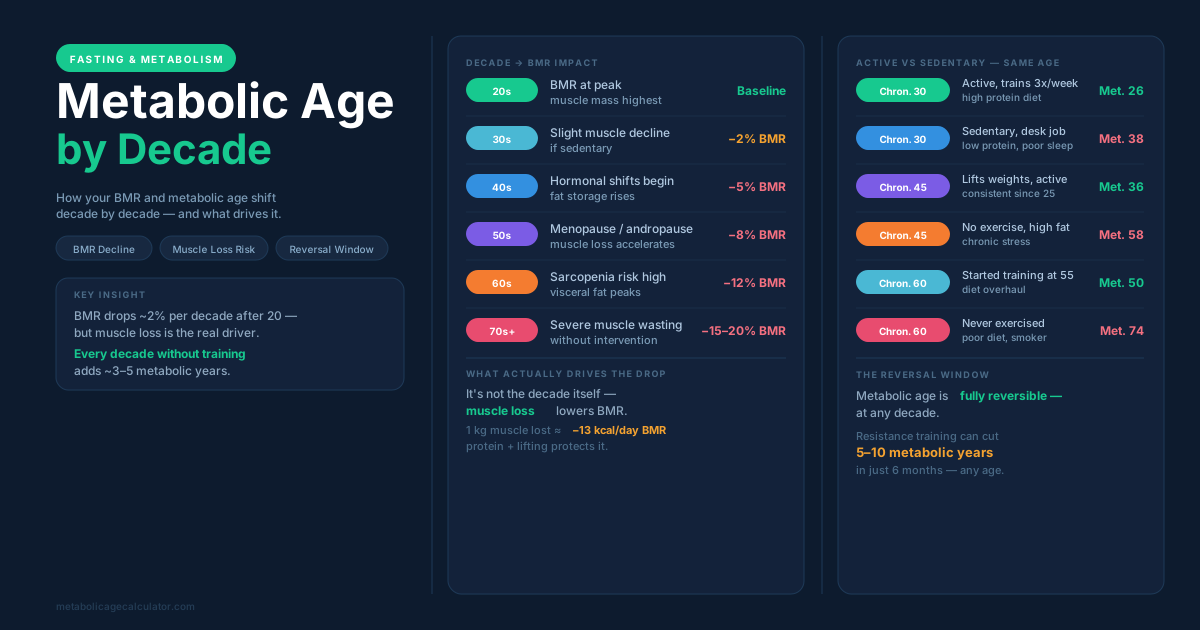
Your metabolic age by decade tells you how efficiently your body burns calories at rest compared to population averages for each age group. A metabolic age below your chronological age signals above-average muscle mass and metabolic function; a metabolic age above it signals the opposite.
Metabolic age compares your Basal Metabolic Rate (BMR) calories burned at complete rest to average BMR values for people in your age group. The Mifflin-St Jeor equation is the clinical gold standard for estimating BMR, with ±5% accuracy for most adults.
This guide breaks down normal metabolic age ranges for each decade of life, explains the biological shifts behind the numbers, and shows you the metabolic age calculator steps to check your own result instantly.
What Is Metabolic Age and How Is It Calculated?
Metabolic age is the age group whose average BMR matches yours. If your BMR equals the average for a 35-year-old but you are 45, your metabolic age is 35. The 4-step calculation process works as follows:
- Step 1: Measure or estimate your BMR using the Mifflin-St Jeor equation.
- Step 2: Compare your BMR to validated age-group averages for your sex.
- Step 3: Identify the age group whose average BMR is closest to yours.
- Step 4: That age group number is your metabolic age.
Metabolic age differs from biological age. Biological age measures cellular markers DNA damage, telomere length, and organ function. Metabolic age measures how efficiently your energy systems burn calories at rest, primarily driven by lean muscle mass.
Smart scales estimate metabolic age using Bioelectrical Impedance Analysis (BIA) a small electrical current that estimates lean body mass. The BMR vs RMR guide explains the formulas behind these calculations in full detail.
Metabolic Age by Decade: Normal Ranges at a Glance
The table below shows typical BMR ranges and metabolic age benchmarks for each decade. These figures use Mifflin-St Jeor averages for adults of average height 5 feet 9 inches (175 cm) for males and 5 feet 4 inches (163 cm) for females at moderate activity levels.
|
Decade |
Avg BMR (Male) |
Avg BMR (Female) |
Key Change |
Metabolic Age Goal |
|
20s |
1,750–1,900 kcal/day |
1,450–1,600 kcal/day |
Peak muscle mass; highest BMR |
Equal to or below chronological age |
|
30s |
1,650–1,800 kcal/day |
1,380–1,520 kcal/day |
Sarcopenia begins (~1% muscle/year) |
Within 2–3 years of chronological age |
|
40s |
1,560–1,700 kcal/day |
1,300–1,450 kcal/day |
BMR drops ~0.5% per year; visceral fat rises |
Within 3–5 years of chronological age |
|
50s |
1,470–1,620 kcal/day |
1,240–1,380 kcal/day |
Menopause/andropause; accelerated muscle loss |
Within 5 years of chronological age |
|
60s+ |
1,380–1,520 kcal/day |
1,150–1,300 kcal/day |
Metabolic rate declines 0.7%/year; cellular slowdown |
Within 5–7 years of chronological age |
A good metabolic age equals or falls below your chronological age. Each 5-year gap between metabolic age and chronological age corresponds roughly to 1 decade of muscle mass difference.
Metabolic Age in Your 20s: The Peak Decade
Adults in their 20s reach peak muscle mass and peak BMR between ages 20 and 25. Male BMR at this stage typically ranges from 1,750 to 1,900 kcal per day; female BMR ranges from 1,450 to 1,600 kcal per day.
What a Normal Metabolic Age Looks Like in Your 20s
A normal metabolic age for a 25-year-old sits within 2 years of chronological age in either direction. A 22-year-old with a metabolic age of 19 has exceptional muscle mass and calorie-burning capacity. A 28-year-old with a metabolic age of 34 has already begun accumulating excess body fat relative to muscle.
The 20s are the best decade to build metabolic reserves. Every kilogram (2.2 lbs) of muscle you add burns roughly 13 kcal per day at rest compounding over decades of life.
Why Metabolic Age Can Worsen in Your Late 20s
Sedentary lifestyle and processed food diets cause BMR to drop even in this peak decade. Research shows VO₂ Max a key aerobic fitness marker declines at roughly 1% per year after age 25 without active training. Gaining 4.5 kg (10 lbs) of fat mass while losing 2 kg (4.4 lbs) of muscle adds approximately 3 to 5 years to metabolic age within a single decade.
Metabolic Age in Your 30s: When Sarcopenia Begins
Adults in their 30s begin losing muscle mass at approximately 1% per year a process called sarcopenia. This directly reduces BMR and pushes metabolic age upward year by year without targeted resistance training.
Normal BMR and Metabolic Age Benchmarks for the 30s
A healthy metabolic age in the 30s sits within 3 years of your actual age. Male BMR in this decade ranges from 1,650 to 1,800 kcal per day; female BMR from 1,380 to 1,520 kcal per day.
Hormonal shifts compound the muscle loss. Testosterone in men and estrogen in women both begin a gradual decline in the early 30s. Lower testosterone accelerates fat accumulation in the abdominal region, raising visceral fat levels and reducing insulin sensitivity.
How Lifestyle in Your 30s Sets the Metabolic Trajectory
Adults who train 3 or more times per week during their 30s maintain metabolic ages 5 to 8 years below peers who remain sedentary. Prioritising 1.6 g of protein per kilogram (0.73 g per lb) of bodyweight daily preserves lean body mass and keeps BMR from dropping below decade averages.
Sleep deprivation common in this decade with career and family demands compounds the problem. A study in Annals of Internal Medicine found sleep-deprived dieters lost 55% less fat and 60% more muscle compared to well-rested dieters on identical diets.
Metabolic Age in Your 40s: The Accelerating Gap
BMR falls at roughly 0.5% per year during the 40s. A 45-year-old who has been sedentary since their 30s may carry a metabolic age 10 or more years above their chronological age.
What Metabolic Age Numbers Mean in the 40s
A metabolic age within 5 years of chronological age in the 40s indicates above-average muscle maintenance. Male BMR in this decade averages 1,560 to 1,700 kcal per day; female BMR averages 1,300 to 1,450 kcal per day.
Visceral fat fat stored around the organs becomes clinically significant in many adults during their 40s. Visceral fat increases inflammation, worsens insulin resistance, and further suppresses BMR. A waist circumference above 40 inches (102 cm) for men and above 35 inches (89 cm) for women signals elevated visceral fat risk.
3 Biological Shifts That Raise Metabolic Age in the 40s
- Testosterone drops 1–2% per year in men from age 40, reducing muscle-building capacity.
- Estrogen shifts in women during perimenopause alter fat distribution increasing abdominal fat while reducing hip fat.
- Mitochondrial efficiency decreases in muscle cells, reducing the calorie-burning capacity per kilogram of muscle.
Metabolic Age in Your 50s: Hormonal Shifts and Accelerated Decline
The 50s bring menopause in women (average age 51 in the US and UK) and andropause in men both of which accelerate muscle loss and BMR decline. Male BMR in this decade averages 1,470 to 1,620 kcal per day; female BMR averages 1,240 to 1,380 kcal per day.
How Menopause Affects Metabolic Age in Women
Estrogen withdrawal during menopause shifts fat storage from the hips and thighs to the abdomen. Women gain an average of 1 to 2 kg (2.2 to 4.4 lbs) during the menopausal transition without any change in caloric intake. Muscle mass loss accelerates to 1.5–2% per year post-menopause without resistance training intervention.
How Men's Metabolic Age Changes in Their 50s
Men with andropause-related testosterone decline below 300 ng/dL typically show BMR readings 8–15% below age-group averages. Thyroid function also warrants monitoring in this decade hypothyroidism affects roughly 5% of adults over 50 and directly suppresses BMR.
Adults in their 50s who follow structured lower your metabolic age strategies resistance training 3 times per week, protein intake of 1.6–2.2 g per kg (0.73–1 g per lb) of bodyweight, and 7–9 hours of sleep consistently maintain metabolic ages 5 to 10 years below sedentary peers.
Metabolic Age in Your 60s and Beyond: Cellular Slowdown
Research published in Science (Pontzer et al., 2021) found metabolic rate declines at 0.7% per year after age 60 not due to lifestyle alone but due to genuine cellular slowdown. A person in their 90s needs 26% fewer calories per day than a midlife adult with equivalent muscle mass.
Male BMR in the 60s averages 1,380 to 1,520 kcal per day; female BMR averages 1,150 to 1,300 kcal per day. A metabolic age within 5 to 7 years of chronological age in this decade reflects excellent metabolic health.
Why Metabolic Age Still Matters After 60
Metabolic age predicts functional independence in older adults. Adults aged 65 and older with metabolic ages below their chronological age show lower rates of cardiovascular disease, type 2 diabetes, and all-cause mortality compared to metabolic-age-matched controls who are chronologically younger.
High-fit adults over 60 regularly achieve metabolic ages 15 to 20 years below their chronological age. This reflects the power of consistent resistance training the muscle loss from sarcopenia is not inevitable; studies show 12 weeks of progressive resistance training rebuilds measurable lean mass in adults in their 70s and 80s.
3 Signs Your Metabolic Age Is Too High in Your 60s
- BMR below 1,300 kcal per day (male) or below 1,100 kcal per day (female) at a healthy bodyweight.
- Waist circumference above 40 inches (102 cm) for men or above 35 inches (89 cm) for women with normal BMI.
- Fasting blood glucose above 5.6 mmol/L (100 mg/dL) alongside BMR decline a marker of worsening insulin sensitivity.
How to Reduce Metabolic Age Across Every Decade
To reduce metabolic age, build and preserve skeletal muscle the single largest driver of BMR. The 5 evidence-based strategies below apply across all decades, with decade-specific priorities noted:
- Resistance training 3 times per week: Progressive overload increasing weight or reps every 2 weeks builds the lean mass that raises BMR. Each additional kg (2.2 lbs) of muscle adds roughly 13 kcal per day at rest.
- Protein intake of 1.6–2.2 g per kg (0.73–1 g per lb) of bodyweight: Protein has a thermic effect of 20–35% your body burns those calories digesting it. High-protein foods: chicken breast, eggs, Greek yoghurt, lentils, cottage cheese.
- 7–9 hours of sleep nightly: Sleep deprivation raises cortisol, breaks down muscle, and lowers BMR. Consistent sleep is non-negotiable for metabolic health.
- HIIT (High-Intensity Interval Training) 1–2 times per week: HIIT creates EPOC (Excess Post-Exercise Oxygen Consumption), keeping calorie burn elevated for up to 24 hours post-session.
- Increasing NEAT (Non-Exercise Activity Thermogenesis): NEAT walking, standing, taking stairs accounts for 15–30% of total daily energy expenditure for active adults.
How to Calculate Your Own Metabolic Age Right Now
To calculate your metabolic age, use the Mifflin-St Jeor equation or a validated online tool. The 3 inputs you need are: your age, height, weight, and sex. Optional: add body fat percentage for a more precise lean-mass-adjusted result.
The Mifflin-St Jeor formula for males: BMR = (10 × weight in kg) + (6.25 × height in cm) − (5 × age) + 5. For females: BMR = (10 × weight in kg) + (6.25 × height in cm) − (5 × age) − 161.
Compare your result to the decade benchmarks in the table above. The free metabolic age calculator does this comparison automatically and returns your BMR, TDEE, and metabolic age in under 60 seconds, with no sign-up required.
Frequently Asked Questions About Metabolic Age by Decade
Is a metabolic age lower than your real age good?
Yes. A metabolic age below your chronological age means your BMR exceeds the average for your age group. This indicates above-average muscle mass, efficient calorie burning, and better metabolic health outcomes.
At what age does metabolic rate start declining significantly?
After age 60. Research from Pontzer et al. (2021) found metabolic rate stays stable through the 20s, 30s, 40s, and 50s when controlled for body composition. Cellular metabolic slowdown begins after 60 at 0.7% per year.
Can you reverse a high metabolic age in your 50s or 60s?
Yes. Progressive resistance training rebuilds measurable lean mass in adults in their 50s, 60s, and beyond. A 12-week resistance training programme produces measurable BMR increases within 8–12 weeks, regardless of starting age.
How often should you recheck your metabolic age?
Every 8–12 weeks during active lifestyle changes; every 6 months for maintenance. Monthly rechecks are motivating but may not show statistically significant changes due to normal BMR fluctuation of ±3–5%.
Is metabolic age the same as biological age?
No. Metabolic age compares your BMR to age-group averages. Biological age measures cellular markers telomere length, DNA methylation, and organ function scores. Both measure aging from different angles; metabolic age is more actionable because you can change it directly through diet and exercise.
Take Action: Find Your Metabolic Age in Under 60 Seconds
Your metabolic age by decade gives you a precise, actionable number not a vague sense of health. In your 20s, the goal is to build metabolic reserves. In your 30s and 40s, the goal is to prevent muscle loss from outpacing BMR. In your 50s and 60s, the goal is targeted resistance training and protein intake to hold metabolic age as close to chronological age as possible.
Use the free metabolic age calculator at Metabolic Age Calculator to get your BMR, TDEE, and metabolic age instantly no email, no sign-up, results in 60 seconds. Then retest every 8–12 weeks as you build the habits that move the number.