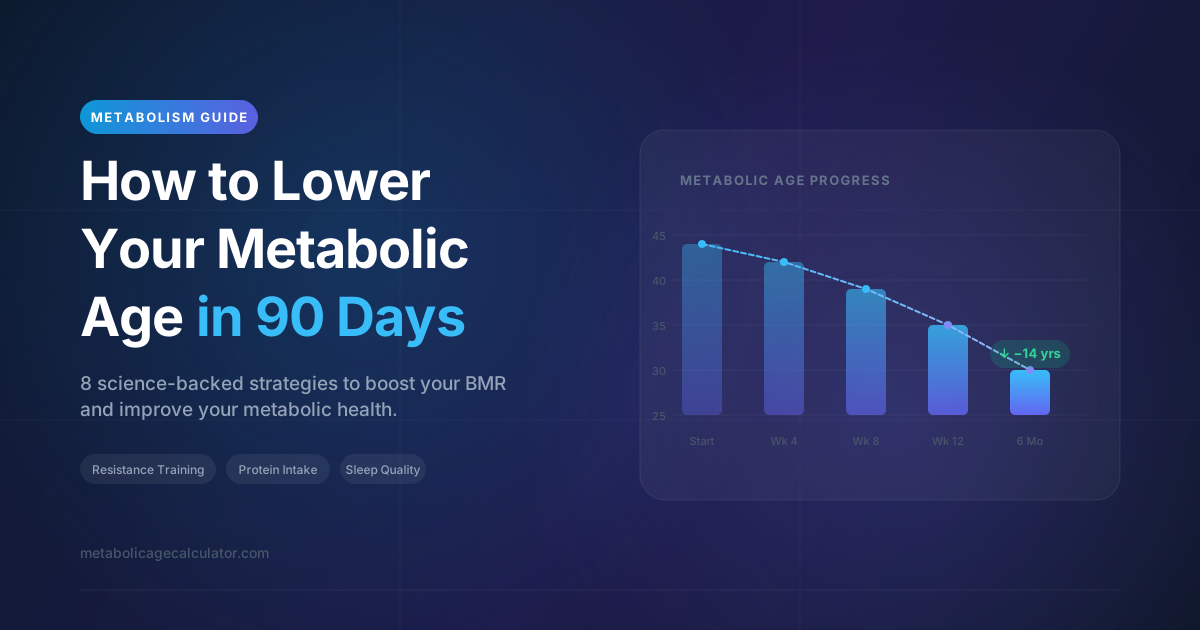
Your metabolic age tells you how your calorie-burning engine compares to others your age. If it’s higher than your real age, your metabolism is underperforming. The good news: metabolic age is one of the most changeable health numbers you have.
This guide covers the 8 most effective, research-backed ways to lower it.
Why Your Metabolic Age Is High (The Root Causes)
Before fixing the problem, it helps to understand it. Metabolic age is a reflection of your Basal Metabolic Rate (BMR) — the calories your body burns at rest. A high metabolic age means your BMR is lower than average for people your age.
The three biggest drivers of a low BMR:
- Low lean muscle mass — muscle is metabolically expensive tissue. The less you have, the fewer calories you burn at rest.
- Sedentary lifestyle — inactivity accelerates muscle loss and reduces metabolic rate over time.
- Hormonal imbalances — poor sleep, chronic stress, and thyroid issues all suppress BMR.
Address these, and your metabolic age will drop.
1. Prioritise Resistance Training
This is the single most effective lever for improving metabolic age. Skeletal muscle raises your BMR directly — each kilogram of muscle burns roughly 13 kcal per day at rest, compared to about 4.5 kcal for fat.
A meta-analysis in Obesity Reviews found that combined aerobic and resistance training significantly increased resting metabolic rate compared to cardio alone.
How to apply it:
- Train 3–4 sessions per week targeting all major muscle groups
- Focus on compound lifts: squats, deadlifts, bench press, rows, overhead press
- Progressive overload is key — increase weight or reps each week
- You don’t need a gym; bodyweight progressions work if done consistently
Most people notice a measurable BMR increase within 8–12 weeks of consistent resistance training.
2. Eat Enough Protein
Protein has a higher thermic effect of food (TEF) than carbs or fat — your body burns 20–35% of protein calories just digesting it, vs 5–10% for carbs and 0–3% for fat.
More importantly, adequate protein preserves muscle mass during any calorie deficit, which protects your BMR from dropping.
Target: 1.6–2.2 g of protein per kilogram of bodyweight per day.
High-protein foods: chicken breast, eggs, Greek yoghurt, cottage cheese, lentils, tofu, whey protein.
3. Don’t Crash Diet
Severely cutting calories triggers a survival response: your body lowers BMR to conserve energy. This is called adaptive thermogenesis, and it can persist for months after you return to normal eating — making future fat loss harder.
If you need to lose fat, aim for a moderate deficit of 300–500 kcal/day rather than slashing calories. Pair it with resistance training to preserve muscle, and your metabolic age will trend down alongside your body fat.
4. Improve Your Sleep Quality
Sleep is the most underrated metabolic lever. Poor sleep:
- Raises cortisol, which promotes muscle breakdown
- Lowers growth hormone, which is critical for muscle repair and fat metabolism
- Increases ghrelin (hunger hormone) and decreases leptin (satiety hormone)
A study published in Annals of Internal Medicine found that sleep-deprived dieters lost 55% less fat and 60% more muscle compared to well-rested dieters on the same diet.
Target 7–9 hours of quality sleep per night. Prioritise a consistent sleep schedule, a cool dark room, and no screens 30 minutes before bed.
5. Add HIIT to Your Cardio Routine
High-Intensity Interval Training (HIIT) creates an afterburn effect known as Excess Post-Exercise Oxygen Consumption (EPOC). Your body continues burning elevated calories for up to 24 hours after a HIIT session.
Sample beginner HIIT protocol:
- 5-minute warm-up
- 8 rounds: 20 seconds all-out effort / 40 seconds rest
- 5-minute cool-down
- Total: ~18 minutes, 2–3 times per week
HIIT also preserves muscle better than steady-state cardio, making it a superior choice for metabolic health.
6. Stay Active Outside the Gym (NEAT)
Non-Exercise Activity Thermogenesis (NEAT) is the energy you burn through everything that isn’t formal exercise — walking, fidgeting, taking stairs, standing. For many people, NEAT accounts for 15–30% of total daily energy expenditure.
Two people with identical gym routines can have wildly different metabolic rates based on NEAT alone.
Easy NEAT wins:
- Walk 7,000–10,000 steps per day
- Take the stairs instead of the lift
- Stand or pace during phone calls
- Use a standing desk for part of your workday
7. Manage Chronic Stress
Cortisol — the primary stress hormone — is a potent muscle-wasting and fat-storing compound. Chronically elevated cortisol breaks down lean muscle (reducing BMR) and promotes visceral fat storage.
Effective stress management strategies with metabolic benefits:
- Meditation or breathwork — even 10 minutes daily lowers cortisol
- Time in nature — proven to reduce stress hormones
- Reducing caffeine after midday — excess caffeine elevates cortisol
- Regular social connection — loneliness is a chronic stressor
8. Check Your Thyroid
If you’ve done everything right for 12+ weeks and your metabolic age isn’t budging, it’s worth getting a thyroid panel done. Hypothyroidism (underactive thyroid) directly suppresses BMR and is more common than most people realise — affecting roughly 5% of adults, with women significantly more at risk.
Symptoms include persistent fatigue, cold intolerance, unexplained weight gain, and brain fog. A simple blood test (TSH, free T3, free T4) can rule this out.
How Long Will It Take?
Here’s a realistic timeline for most people who implement the strategies above consistently:
| Timeframe | What to Expect |
|---|---|
| 2–4 weeks | Improved energy, better sleep, reduced bloating |
| 6–8 weeks | Measurable increase in strength, early body composition changes |
| 10–12 weeks | Noticeable BMR increase, metabolic age starts dropping |
| 6 months | Significant and sustained metabolic age improvement |
Consistency beats intensity. Small, sustainable habits compound into large metabolic changes.
Track Your Progress
The best way to stay motivated is to measure results. Use our free metabolic age calculator to get a baseline today, then retest every 8–12 weeks as you implement these changes.
You’ll be surprised how quickly your number moves when you address the root causes.
The Bottom Line
Lowering your metabolic age comes down to three things: build muscle, protect muscle, and support recovery. Resistance training and protein intake address the first two. Sleep, stress management, and avoiding crash diets handle the third.
Start with whichever two strategies feel most achievable, build the habit, then layer in the rest. Your metabolism responds faster than most people expect.