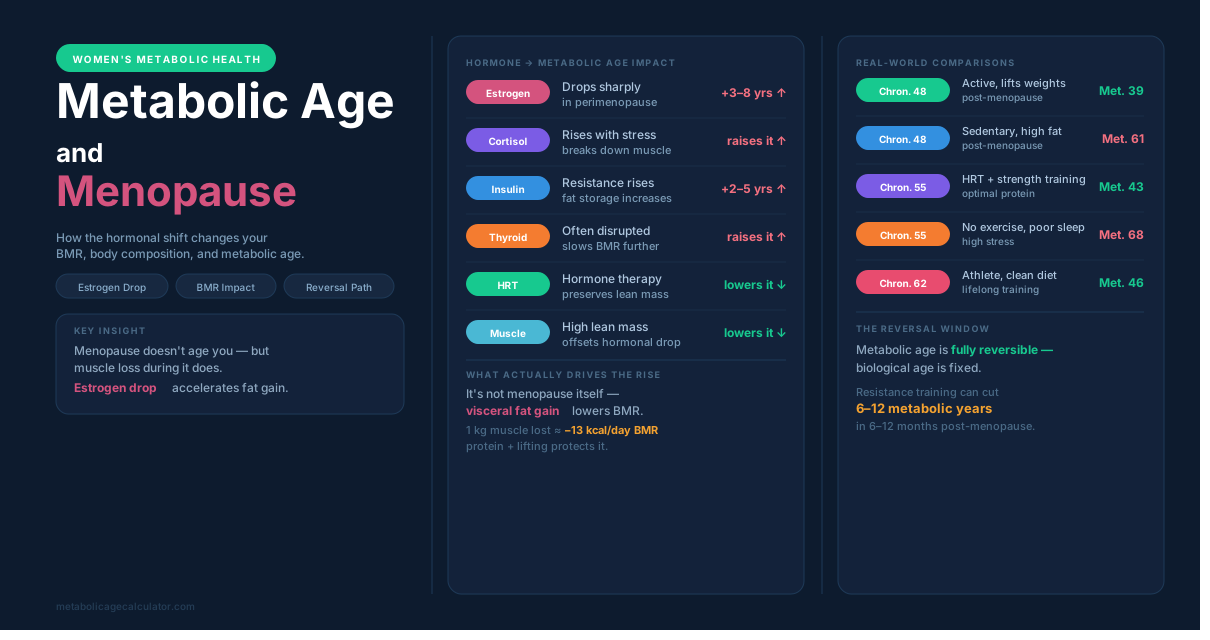
Your metabolic age increases during menopause because declining estrogen levels alter your body composition and slow your basal metabolic rate. This hormonal transition shifts fat storage to your abdomen and reduces lean muscle mass. You can calculate your baseline numbers using a dedicated system to understand metabolic age and implement precise lifestyle adjustments.
Chronological aging describes the absolute number of years you live. Metabolic aging evaluates your resting cellular energy output against general population benchmarks. When your biological efficiency decreases, your body burns fewer calories at rest. This structural slowdown elevates your metabolic age score above your actual chronological years.
The transition through female reproductive decline involves 3 distinct phases. Perimenopause introduces irregular cycle fluctuations. Menopause marks the total cessation of menstrual bleeding for 12 consecutive months. Postmenopause defines the remaining years of life following that clinical milestone. Every single phase actively influences your metabolic rate.
Hormonal shifts reduce the resting metabolic rate by approximately 5 percent each decade after you cross age 40. This decline accelerates during the active menopausal years. The physical reality requires an immediate shift in movement habits, structural nutrition planning, and regular biological tracking. You must modify your daily routines to prevent weight accumulation.
Why Does Your Basal Metabolic Rate Decrease After Age 40?
Your basal metabolic rate decreases after age 40 primarily because your skeletal muscle mass experiences steady natural decline. The body replaces highly active contractile tissue with less metabolically active adipose storage cells.
The Decline of Lean Muscle Tissue
Sarcopenia defines the age-related reduction of skeletal muscle mass and functional physical strength. Women lose between 3 percent and 8 percent of pure muscle tissue every decade after reaching age 30. This process accelerates rapidly when you enter the menopausal transition.
Muscle tissue burns roughly 6 calories per pound (13 calories per kilogram) daily while completely at rest. Fat tissue burns only 2 calories per pound (4.4 calories per kilogram) each day. When you lose 5 pounds (2.2 kilograms) of muscle, your body automatically burns 30 fewer calories every day.
The Natural Slowing of Cellular Activity
Mitochondrial efficiency declines as you grow older. Mitochondria serve as the primary energy production units within your individual cells. Lower mitochondrial density decreases your total oxygen consumption during resting states.
Thyroid hormone conversion processes also slow down with advancing biological age. The liver converts less thyroxine into triiodothyronine. Lower active thyroid hormone levels immediately reduce your baseline energy expenditure.
How Does Estrogen Loss Affect Fat Storage and Metabolic Age?
Estrogen loss forces your body to redirect fat storage away from your subcutaneous limbs directly into your deep abdominal cavity. This specific distribution shift alters your physical body composition and increases your metabolic age.
The Shift from Subcutaneous to Visceral Fat
Ovarian failure drops circulating estradiol levels by more than 80 percent during the menopausal transition. Active estrogen normally stimulates subcutaneous fat deposition around your hips and outer thighs. This fat provides safe energy storage.
Low estrogen levels cause your body to accumulate visceral adipose tissue around your internal abdominal organs. This deep belly fat generates systemic inflammatory molecules. Visceral fat accumulation actively increases your biological aging score.
Hormonal Influence on Your Lipid Profile
Declining hormones alter how your liver processes circulating fats. Your liver increases the production of low-density lipoprotein cholesterol. Your protective high-density lipoprotein cholesterol levels simultaneously drop.
Triglyceride levels rise inside your bloodstream within 12 months of your final menstrual period. High triglycerides slow down vascular blood flow. This systemic lipid shift compromises your foundational metabolic efficiency.
Why Does Insulin Resistance Rise During the Menopause Transition?
Insulin resistance rises during the menopause transition because declining estrogen levels impair your skeletal muscle cells from properly absorbing blood glucose. Your pancreas must secrete higher insulin quantities to clear simple carbohydrates.
Fluctuating Blood Glucose Levels
Estrogen regulates your cellular insulin receptors. When estrogen levels plummet, your cells exhibit reduced sensitivity to normal insulin signals. Blood sugar remains elevated inside your blood vessels for longer durations.
Frequent glucose spikes stimulate your pancreas to produce excess insulin hormone. High circulating insulin blocks your body from breaking down stored fat cells. Your system locks energy inside your fat tissue.
Cellular Response to Declining Estrogen Levels
Skeletal muscle tissue contains abundant alpha-estrogen receptors. These receptors facilitate rapid glucose transporter migration to cell membranes during movement. Estrogen depletion removes this natural transport mechanism.
Your liver also experiences reduced insulin sensitivity during this hormonal phase. The liver releases excess stored glucose into your blood during overnight fasting hours. This elevates your morning fasting glucose markers.
How Do Sleep Disruption and High Cortisol Impact Your Metabolic Age?
Sleep disruption and high cortisol levels elevate your metabolic age by increasing your daily production of hunger-stimulating hormones and promoting fat storage. Chronically poor sleep directly damages your baseline energy regulation.
The Impact of Night Sweats on Hunger Hormones
Vasomotor symptoms like intense night sweats wake you up multiple times during your standard sleep cycle. Getting less than 6 hours of sleep alters your appetite signaling chemicals. Your ghrelin levels increase by 15 percent.
Ghrelin stimulates your immediate appetite for calorie-dense foods. Your leptin response simultaneously decreases by 18 percent. Low leptin means your brain fails to receive fullness signals after you eat meals.
Stress Hormones and Abdominal Fat Deposition
Chronic sleep deprivation acts as a major physical stressor that raises your systemic cortisol production. Cortisol activates specific lipoprotein lipase enzymes inside your abdominal fat cells. These enzymes accelerate belly fat accumulation.
High cortisol levels also encourage the breakdown of existing lean muscle tissue for emergency glucose production. This muscle loss drops your basal metabolic rate. Your calculated biological age rises accordingly.
How to Calculate Your Basal Metabolic Rate and Track Metabolic Aging
To calculate your basal metabolic rate and track metabolic aging, you must combine your exact physical metrics with precise bioelectrical impedance analysis data. You can easily calculate basal metabolic values using standardized formulas to establish your absolute metabolic baseline.
The Harris-Benedict Formula for Women
The revised Harris-Benedict mathematical equation estimates your baseline resting calorie needs. The formula requires your exact body weight in kilograms, your precise height in centimeters, and your chronological age in years.
The specific formula for female bodies uses these exact mathematical values: 655.1 + (9.563 x weight in kg) + (1.850 x height in cm) - (4.676 x age). A 50-year-old woman weighing 70 kilograms and standing 165 centimeters tall has a baseline BMR of 1,397 calories.
Incorporating Body Composition Measurements
Standard mathematical formulas do not account for individual muscle-to-fat ratios. You must measure your actual body composition using 4-polar bioelectrical impedance scales. These devices pass safe electrical currents through your feet.
The device measures total tissue impedance to separate fat-free mass from adipose tissue. Advanced software compares your final lean mass percentage against global demographic age databases. This comparison generates your final metabolic age score.
How to Reverse Muscle Loss and Boost Resting Metabolism After 40
To reverse muscle loss and boost resting metabolism after 40, you must perform regular heavy resistance exercise and consume specific quantities of essential amino acids daily. This double-pronged strategy rebuilds your active cellular machinery.
Designing a Progressive Resistance Training Program
You must perform dedicated strength training exercises 3 times each week on non-consecutive days. Focus your efforts on 4 major compound movement patterns: squats, chest presses, dumbbell rows, and Romanian deadlifts.
You should complete 3 sets of 10 repetitions for each exercise using a weight that fatigues your muscles. Increase the external resistance by 5 percent whenever you can complete 12 clean repetitions easily. This progression forces muscle hypertrophy.
Meeting Your Daily Dietary Protein Requirements
You must consume 0.54 grams to 0.73 grams of protein per pound (1.2 grams to 1.6 grams per kilogram) of total body weight daily. This intake level overrides age-related anabolic resistance in postmenopausal tissue.
Divide your protein intake into 4 equal daily servings of 30 grams each. Select lean protein options like wild salmon, skinless chicken breast, pasteurized egg whites, and isolated whey protein powder. Consistent amino acid delivery triggers muscle protein synthesis.
How to Adjust Your Nutrition for Optimal Metabolic Health During Menopause
To adjust your nutrition for optimal metabolic health during menopause, you must eliminate refined simple starches and replace them with dense prebiotic fibers and monounsaturated fatty acids. This meal structure stabilizes blood sugar.
Reducing Refined Carbohydrates and Added Sugar
You must limit your total intake of refined simple carbohydrates to less than 50 grams per day. Avoid drinking sugar-sweetened beverages like sodas, commercial juices, sweetened lattes, and performance energy drinks.
Replace white flour products with whole grains like quinoa, black rice, and sprouted oats. These complex options take longer to digest. They prevent rapid insulin spikes that lock fat inside your adipose tissue.
Increasing Soluble Fiber and Healthy Fats
You must target a minimum daily intake of 35 grams of dietary fiber. Focus on soluble fibers from specific foods like chia seeds, Brussels sprouts, avocados, and whole lentils. Soluble fiber feeds beneficial gut microbes.
Incorporate 2 tablespoons (30 milliliters) of cold-pressed extra virgin olive oil into your daily meals. Eat 1 ounce (28 grams) of raw walnuts or almonds every afternoon. These healthy fats improve your cellular membrane fluidity.
Summary of Metabolic Intervention Tasks for Women Over 40
The table below details 4 primary operational tasks you must execute to optimize your metabolic parameters during the menopausal transition.
|
Task Description |
Timing / Frequency |
Method Used |
Difficulty Level |
Primary Benefit |
|
Resistance Training |
3 times per week |
Lift weights for 45 minutes |
Moderate |
Preserves lean muscle mass |
|
Protein Optimization |
Every single meal |
Eat 30 grams of pure lean protein |
Low |
Triggers protein synthesis |
|
Refined Carb Reduction |
Continuous daily tracking |
Limit simple starches to under 50g |
High |
Improves insulin sensitivity |
|
Metabolic Tracking |
1 time per month |
Use bioimpedance measurement scales |
Low |
Monitors biological aging trends |
Common Questions About Weight Management and Metabolic Age and Menopause
Can you reverse a high metabolic age score after menopause?
Yes, you can lower your biological score by building new skeletal muscle tissue through consistent heavy weight lifting. Increasing your active muscle mass automatically raises your baseline daily calorie expenditure.
Does hormone replacement therapy completely fix a slow metabolism?
No, hormone replacement therapy helps stabilize body fat distribution patterns but it does not automatically rebuild lost muscle tissue. You must still perform regular resistance exercise to fully restore your resting metabolic rate.
How much does your resting daily calorie burn drop after menopause?
The baseline resting energy expenditure drops by approximately 200 calories to 300 calories daily for most average women over age 50. You must reduce food portions or increase physical activity to match this shift.
Should you perform long cardio sessions to boost your menopausal metabolism?
No, excessive steady-state cardiovascular exercise can increase circulating cortisol levels and accelerate lean muscle tissue degradation. Prioritize heavy resistance training sessions over long distance running to protect your active muscle mass.
Does visceral abdominal fat affect your cellular insulin sensitivity?
Yes, deep visceral fat cells secrete specific inflammatory cytokines that directly block insulin molecules from opening your muscle cell glucose gates. This chemical interference promotes permanent insulin resistance.
Strategic Steps for Long-Term Metabolic Success
Managing your health during the menopausal transition requires active intervention to counter natural cellular slowing and muscle loss. By using targeted resistance exercise, eating structured lean proteins, and monitoring your physical metrics, you can successfully lower your biological score. Use the digital calculation tools to boost resting metabolism and take complete control of your physical health journey today.