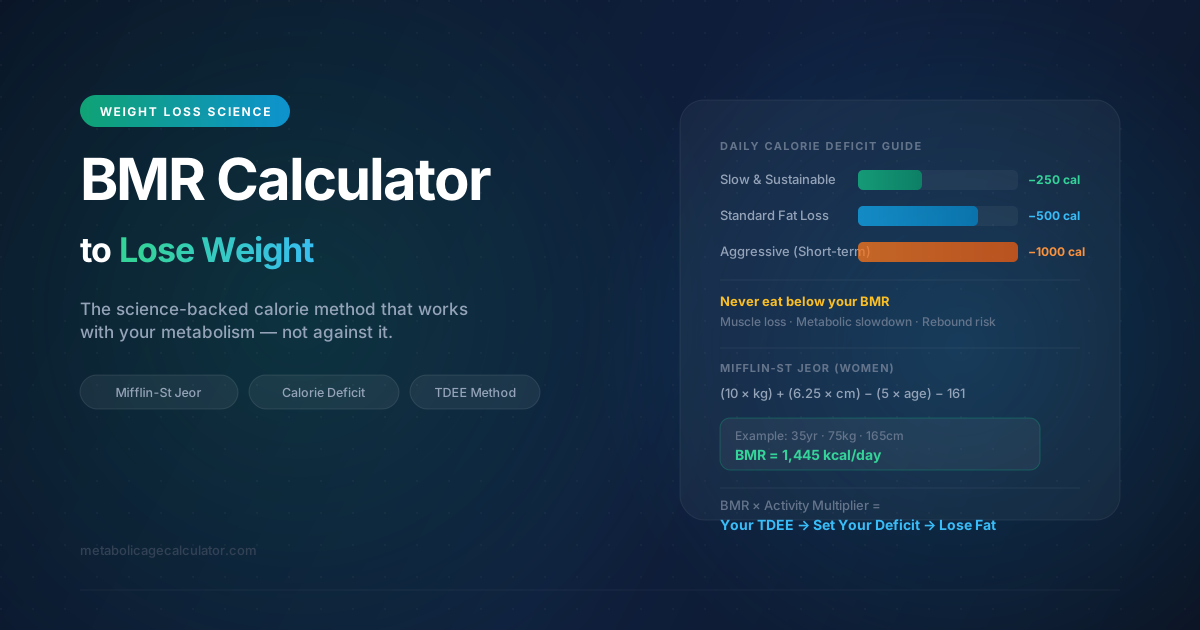
If you’ve ever wondered why two people eating the same diet get completely different results, the answer lies in one number: your BMR.
Using a BMR calculator to lose weight is one of the most underrated, science-backed strategies in nutrition. Unlike fad diets that ignore your biology, BMR-based calorie planning works with your metabolism — not against it.
In this guide, you’ll learn exactly what BMR is, how to calculate it, and how to use that number to build a sustainable calorie deficit for real, lasting fat loss.
What Is BMR? (And Why It Matters for Weight Loss)
BMR stands for Basal Metabolic Rate — the number of calories your body burns at complete rest just to keep you alive. Think breathing, heart function, cell repair, and body temperature regulation.
Your BMR accounts for 60–75% of your total daily calorie burn, making it the single most important number in any weight loss plan.
Here’s why it matters:
- Eat below your BMR long-term → muscle loss, metabolic slowdown, hormonal disruption
- Eat too far above your BMR → fat gain
- Use your BMR as a baseline → precise, sustainable calorie targets for fat loss
Most people skip this step and guess their calories. That’s why most diets fail.
How to Calculate Your BMR
The two most widely used formulas are the Mifflin-St Jeor Equation and the Harris-Benedict Equation. The Mifflin-St Jeor is considered more accurate for modern populations.
Mifflin-St Jeor Formula
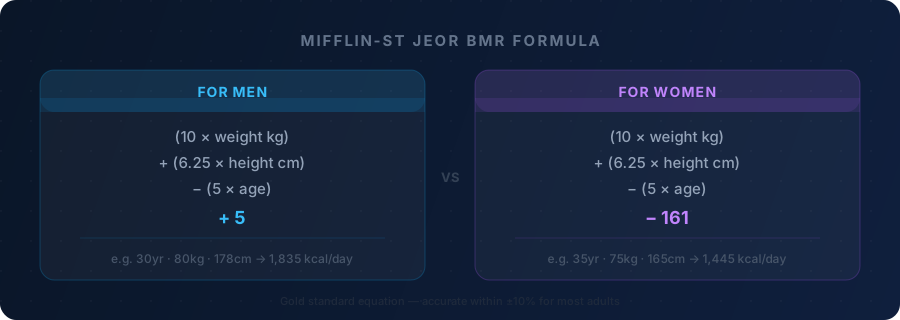
For Men:
BMR = (10 × weight in kg) + (6.25 × height in cm) − (5 × age in years) + 5
For Women:
BMR = (10 × weight in kg) + (6.25 × height in cm) − (5 × age in years) − 161
Example Calculation
A 35-year-old woman weighing 75 kg and standing 165 cm tall:
BMR = (10 × 75) + (6.25 × 165) − (5 × 35) − 161 BMR = 750 + 1,031.25 − 175 − 161 BMR = 1,445 calories/day
This means her body burns 1,445 calories simply to exist — before any movement.
From BMR to TDEE: The Key Step Most People Miss
Your BMR alone isn’t your weight loss number. You need to factor in your activity level to find your TDEE (Total Daily Energy Expenditure).
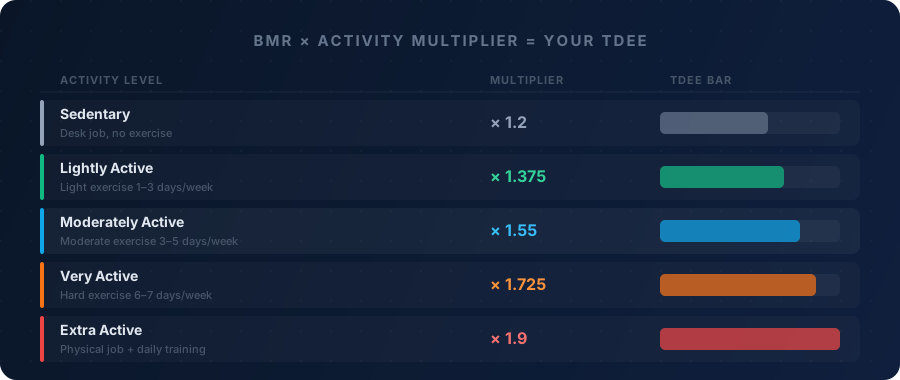
| Activity Level | Multiplier | Description |
|---|---|---|
| Sedentary | × 1.2 | Desk job, little to no exercise |
| Lightly Active | × 1.375 | Light exercise 1–3 days/week |
| Moderately Active | × 1.55 | Moderate exercise 3–5 days/week |
| Very Active | × 1.725 | Hard exercise 6–7 days/week |
| Extra Active | × 1.9 | Physical job + daily training |
Using our example: The 35-year-old woman is lightly active:
TDEE = 1,445 × 1.375 = 1,987 calories/day
This is her maintenance number — eating this keeps her weight stable.
How to Use Your BMR Calculator to Lose Weight
Now comes the actionable part. To lose weight, you need a calorie deficit — consuming fewer calories than your TDEE.
The Safe Deficit Rule
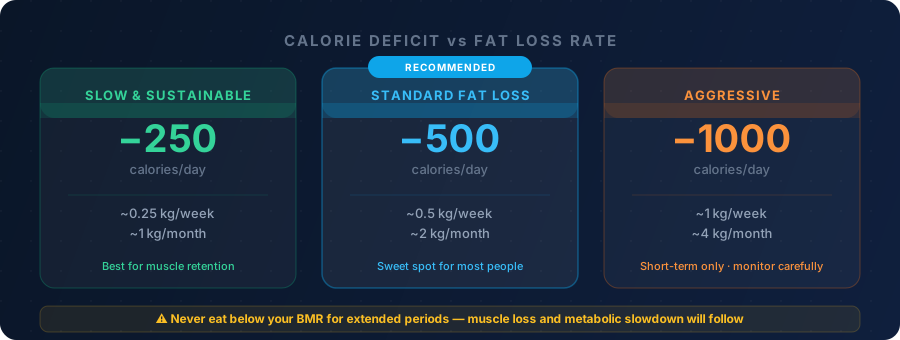
| Goal | Daily Deficit | Expected Loss |
|---|---|---|
| Slow & sustainable | 250–300 calories | ~0.25 kg/week |
| Standard fat loss | 500 calories | ~0.5 kg/week |
| Aggressive (short-term) | 750–1,000 calories | ~0.75–1 kg/week |
Never eat below your BMR for extended periods. Doing so puts your body in starvation mode — muscle breaks down, metabolism slows, and you’re more likely to rebound.
Practical Example
Using our example woman with a TDEE of 1,987 calories:
- Maintenance: 1,987 cal/day
- Standard fat loss target: 1,987 − 500 = 1,487 calories/day
- Expected result: ~2 kg of fat loss per month
This is sustainable, muscle-preserving, and metabolism-friendly.
Factors That Affect Your BMR
Your BMR isn’t fixed — it shifts based on several factors. Understanding these helps you adjust your plan over time.
1. Age
BMR drops approximately 2–3% per decade after age 20. This is why maintaining muscle mass becomes critical as you age.
2. Muscle Mass
Muscle is metabolically expensive — it burns more calories at rest than fat tissue. Every kg of muscle adds roughly 13 calories/day to your BMR. Resistance training is your best long-term metabolic investment.
3. Body Composition
Two people at the same weight but different body fat percentages will have different BMRs. The leaner person burns more at rest.
4. Hormones
Thyroid hormones (T3 and T4), testosterone, estrogen, and cortisol all directly regulate metabolic rate. If fat loss has stalled despite a consistent deficit, hormonal testing is worth considering.
5. Genetics
Studies show BMR can vary by up to 15% between individuals of similar size and composition. Some people are simply born with faster or slower metabolisms.
BMR Calculator to Lose Weight: 5 Common Mistakes to Avoid
Mistake 1: Eating Below Your BMR
This is the most damaging mistake. A 1,200-calorie crash diet might work for two weeks, then your body adapts. Hormone levels drop, hunger spikes, and muscle wastes away. Always keep calories above BMR.
Mistake 2: Using Inaccurate Body Metrics
The formula only works if your inputs are correct. Weigh yourself in the morning after using the bathroom. Use a stadiometer or wall measurement for height — not an old guess.
Mistake 3: Ignoring Non-Exercise Activity
NEAT (Non-Exercise Activity Thermogenesis) — fidgeting, walking to your car, standing — can account for 100–400+ calories daily. People who move more throughout the day lose weight faster even without formal exercise.
Mistake 4: Never Recalculating
As you lose weight, your BMR decreases. Recalculate every 4–6 weeks or whenever you lose 3–5 kg. Failing to adjust is a primary reason weight loss plateaus.
Mistake 5: Treating BMR as the Whole Picture
BMR is the foundation, not the full blueprint. Sleep, stress, water intake, protein targets, and food quality all influence your actual results.
How to Boost Your BMR for Faster Weight Loss
You can actively increase your resting calorie burn:
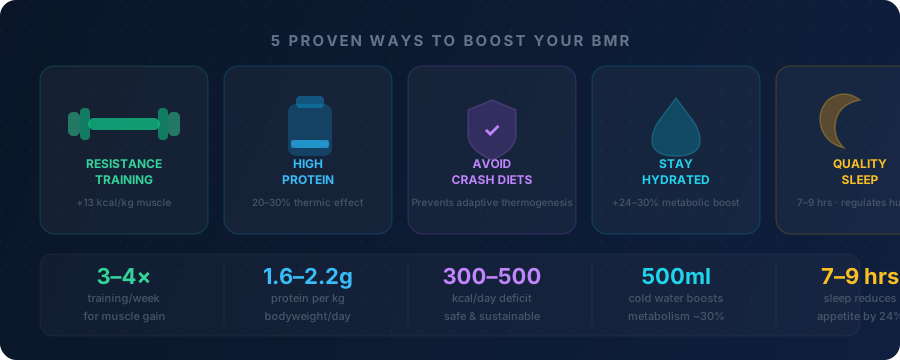
1. Build Muscle Through Resistance Training Strength training 3–4 times per week adds metabolically active tissue. More muscle = higher BMR permanently.
2. Prioritize Protein The thermic effect of protein is 20–30% — your body burns nearly a third of protein calories just digesting it. Aim for 1.6–2.2g of protein per kg of bodyweight.
3. Don’t Crash Diet Severe restriction triggers adaptive thermogenesis — your body deliberately slows its metabolism to conserve energy. Moderate, consistent deficits prevent this.
4. Stay Hydrated Research shows drinking 500ml of cold water temporarily increases metabolic rate by 24–30% for about an hour. Not massive, but it adds up.
5. Prioritize Sleep Poor sleep (under 6 hours) disrupts leptin and ghrelin — the hormones that control hunger and satiety. Sleep deprivation can increase appetite by up to 24% the following day.
Sample Weekly Plan Using BMR-Based Calorie Targets
Here’s how a typical week might look for someone with a TDEE of 2,000 calories targeting a 500-calorie deficit:
| Day | Calorie Target | Notes |
|---|---|---|
| Monday | 1,500 | Strength training day |
| Tuesday | 1,500 | Rest or light cardio |
| Wednesday | 1,600 | Moderate training day |
| Thursday | 1,500 | Rest day |
| Friday | 1,600 | Strength training |
| Saturday | 1,700 | Active lifestyle day |
| Sunday | 1,600 | Rest/recovery |
Weekly average: ~1,571 calories — comfortably within the fat-loss range, with slight increases on higher-activity days.
Frequently Asked Questions
What is a BMR calculator and how does it help with weight loss?
A BMR calculator estimates the number of calories your body burns at rest. Using this number, you can calculate your total daily energy expenditure (TDEE) and set a calorie deficit to systematically lose fat without starving yourself.
Should I eat my BMR calories or my TDEE calories?
You should base your diet on your TDEE (BMR × activity multiplier), not your BMR alone. Your target intake for fat loss is TDEE minus a deficit (typically 300–500 calories).
Is it safe to eat below my BMR?
Eating slightly below BMR for occasional short periods is manageable, but chronically eating below BMR leads to muscle loss, hormonal imbalance, and metabolic adaptation. It is not recommended for sustainable weight loss.
How accurate are online BMR calculators?
Online BMR calculators using the Mifflin-St Jeor equation are accurate to within ±10% for most people. They’re more accurate when you provide precise height, weight, and age data.
How often should I recalculate my BMR when losing weight?
Recalculate every 4–6 weeks or after losing 3–5 kg, since a lower body weight means a lower BMR. Adjusting your calorie target prevents weight loss plateaus.
What is the difference between BMR and RMR?
BMR is measured under strict laboratory conditions. RMR is measured at rest but not under strict conditions. In practice, they’re very similar — for a full breakdown, see our guide on BMR vs RMR.
Conclusion
A BMR calculator to lose weight gives you something most diets never do: a personalized, biology-based starting point.
Instead of guessing, restricting blindly, or following generic advice, you’re working with your actual metabolic data. Calculate your BMR, find your TDEE, apply a sensible deficit, build muscle to raise your baseline, and recalculate as you progress.
That’s not a diet. That’s a system — and systems beat willpower every time.
Start today: Calculate your metabolic age for free and take the guesswork out of weight loss for good.
This article is for informational purposes only and does not constitute medical advice. Consult a registered dietitian or physician before making significant changes to your diet, especially if you have an underlying health condition.